Following Total’s announcement that it is selling part of its oil assets in the Niger Delta, Friends of the Earth France, Hawkmoth, HEDA Resource Centre and Social Action, supported by Corner House and ReCommon, are taking legal action against the parent company of the group.
The organizations are seeking to obtain documents that will shed light on the terms of the proposed transaction, as the provisions of the agreement are currently unclear. Whilst the Niger Delta is known to have been ravaged by oil exploitation, no information has been made public regarding the guarantees provided concerning the management of environmental damage and compensation for those affected. The documents, requested under pre-trial summary proceedings, would enable the organizations to verify whether Total has complied with its Duty of Vigilance under French law.
The Niger Delta ravaged by decades of oil extraction
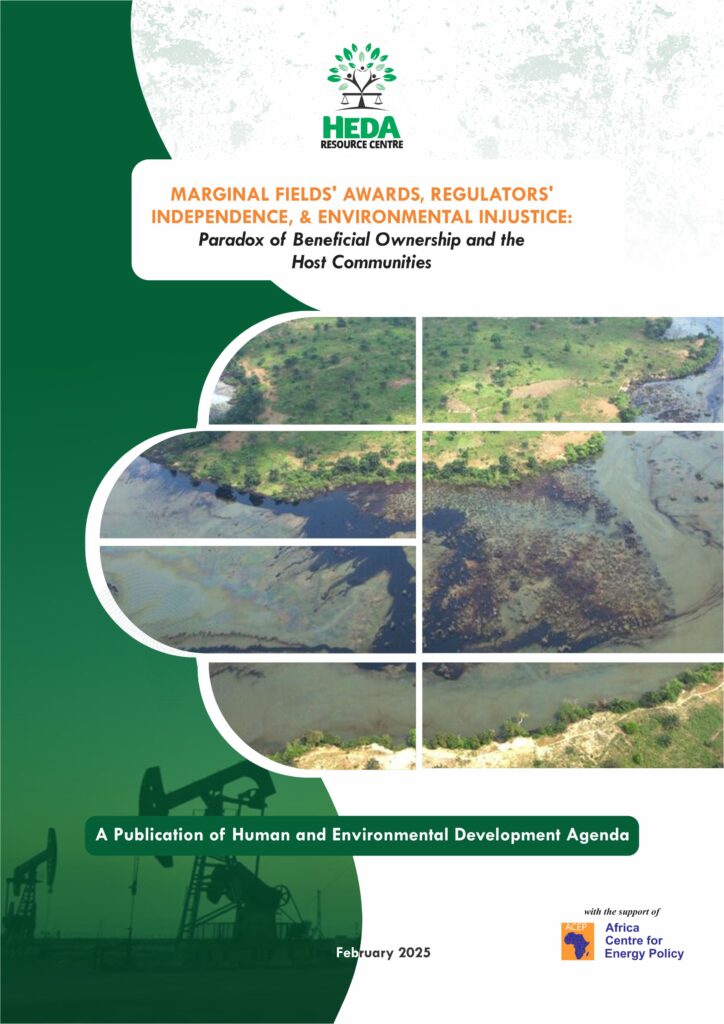
The Niger Delta is now considered one of the “most polluted places on Earth”[1]. Water is unfit for consumption; fisheries have been destroyed; and land has been rendered uncultivable. The volume of hydrocarbons spilled in the area by all oil companies between 1958 and 2010 is estimated at approximately “9 to 13 million barrels”. This is equivalent to approximately 35 to 50 times the volume of oil spilled during the Exxon Valdez tanker disaster in Alaska.


This case is about people, not just oil assets. It is about children growing up with poisoned water, families breathing polluted air, and communities losing their health and livelihoods while international oil companies walk away with decades of profits. These communities must not be treated as corporate sacrifice zones. France’s Duty of Vigilance Law requires Total to demonstrate that its divestment does not further infringe the human rights of people in its oil and gas extraction sites by ensuring adequate remediation.
Dr. Isaac ‘Asume’ Osuoka, Director, Social Action
A gradual withdrawal that risks jeopardizing clean-up efforts
The oil companies Total, Shell and ENI – which have historically operated in the region – are withdrawing one after the other, leaving the affected communities in uncertainty about their future.
In March 2025, Shell sold its subsidiary, the Shell Petroleum Development Company (SPDC), to Renaissance Africa Energy. SPDC was the operator of the onshore oil and gas assets owned by the SPDC joint venture (now renamed “JV Renaissance”), which has contributed significantly to the massive oil pollution in the Niger Delta over the last thirty years. The joint venture, in which Total has a 10 per cent share is now operated by Renaissance African Energy.
In January 2026, TotalEnergies EP Nigeria signed an agreement to sell its stake in the Renaissance JV to a Nigerian consortium, Vaaris. In May 2026, ENI also announced the sale of its stake.
This withdrawal by the major European oil companies, carried out with a complete lack of transparency, is a cause of serious concern for those most directly affected, as well as for local and international organizations: no information has been provided regarding the existence of guarantees concerning the remediation of polluted areas and compensation for those affected. The clean-up of the region could be jeopardized as a result.

”Total served on the international board of the Extractive Industry Transparency Initiative (EITI). So it can’t say it doesn’t understand the public interest, and its own obligation to be transparent about such transactions. We asked Patrick Pouyanné about the deal at this year’s AGM, but all we got back were smoke and mirror claims – just what has Total got to hide?”
Simon Taylor, co-founder of Hawkmoth

“The UN working groups and Mandate holders have categorized the 2024-2025 divestment shenanigans as experiments in divestment without clean-up. The lack of financial capacity to take over assets of SPDC without loan from Shell by Renaissance and inability of Chappal to consummate the take of Total share of SPDC after several extensions of deadlines goes to lack of capacity for liabilities take over by the new buyers”.
Olanrewaju Suraju, Chair of HEDA Resource Centre
Fossil fuel companies must ensure responsible divestment from their operations
Whilst fossil fuel companies reap considerable profits from their activities, they all too often refuse to take responsibility for the legacy of pollution they leave behind. After they have left, local communities remain exposed to long-term health risks and the loss of their livelihoods, with no prospect of redress.
Today, Friends of the Earth France, Hawkmoth, HEDA Resource Centre and Social Action are taking Total to court in France to seek clarification on the terms of its intended divestment from the Renaissance JV.
Under the French Duty of Vigilance Law, Total is required to take the necessary measures to identify risks and prevent serious breaches of human rights and environmental damage resulting from Renaissance JV’s operation and the proposed divestment of Total’s share. The documents requested would enable us to verify whether the company has in fact complied with this obligation.

Oil companies are organizing their divestment with a complete lack of transparency. Following Shell’s withdrawal in 2025, Total’s departure is heightening uncertainty amongst the affected communities: who will fund the clean-up once the major European oil companies have left, taking years of profits with them?
CAMILLE GRANDPERRIN
litigation officer at Friends of the
Earth France